Product-image design for music distributors
You send the catalogue.
We design the image sets.
Send your spreadsheet and authorised product photos. Get five designed images per product, checked against your source data and named by SKU for your shop or dealers.
Human review + one correction round
Reviewed image delivery. Live publishing and feed integrations are separately scoped.
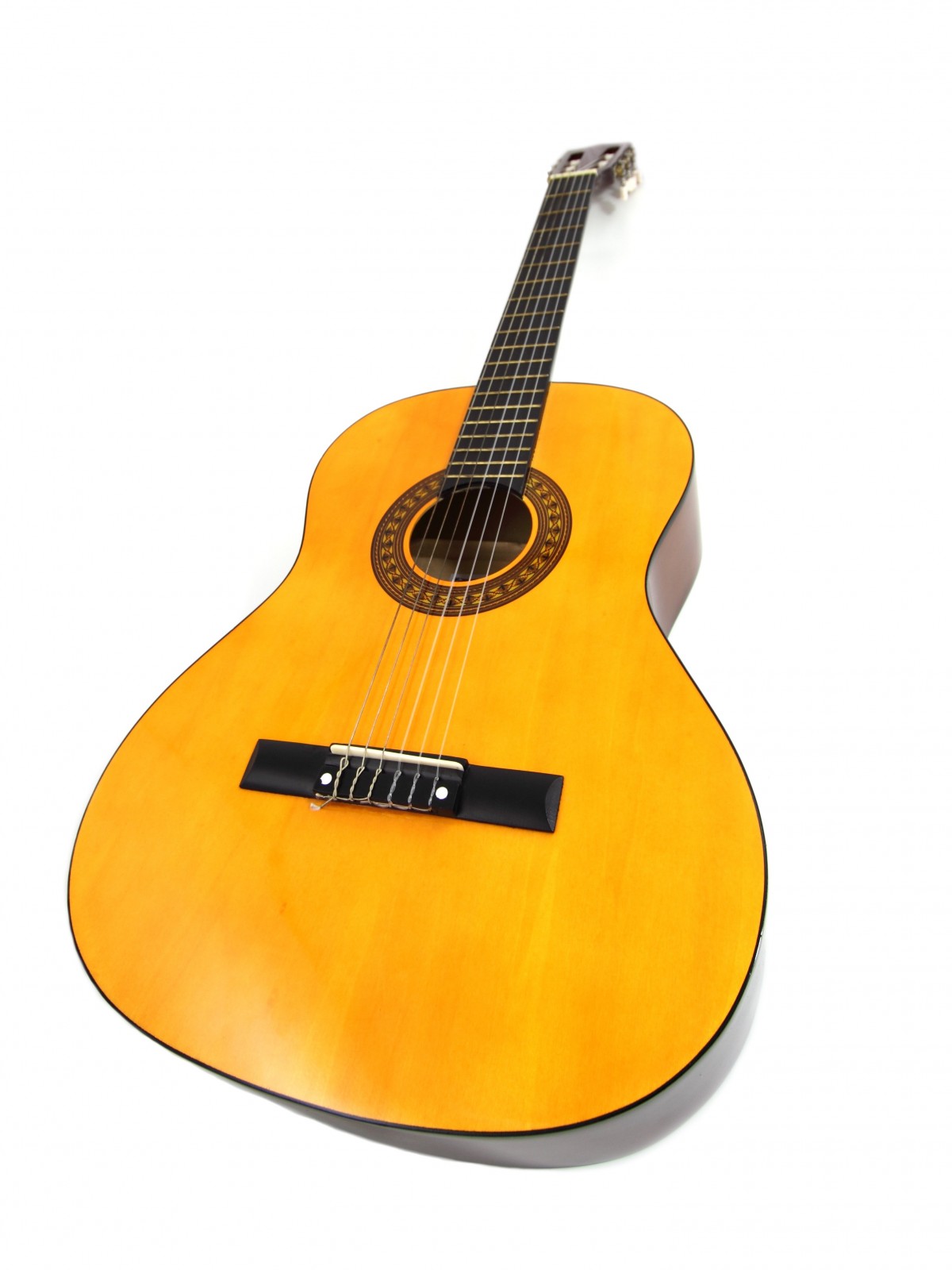
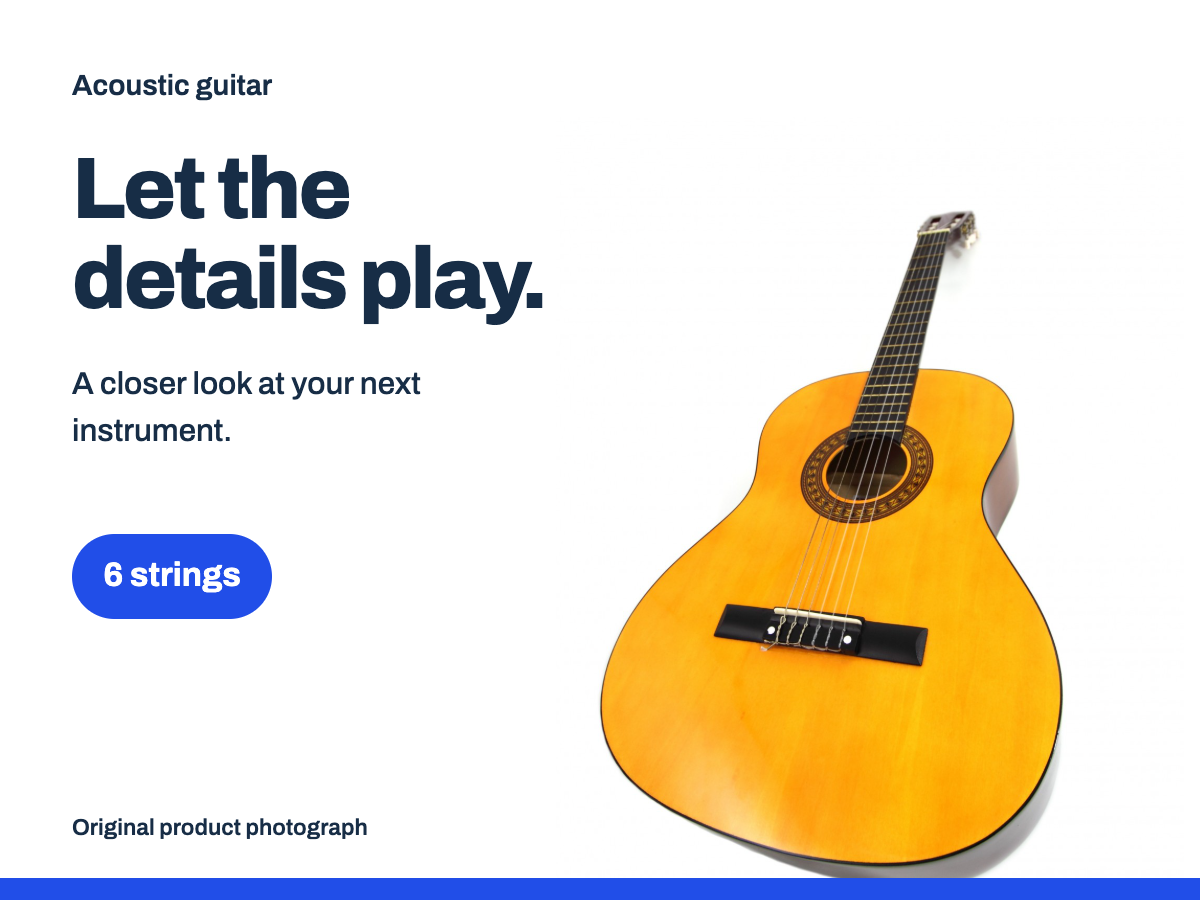
 Before / After
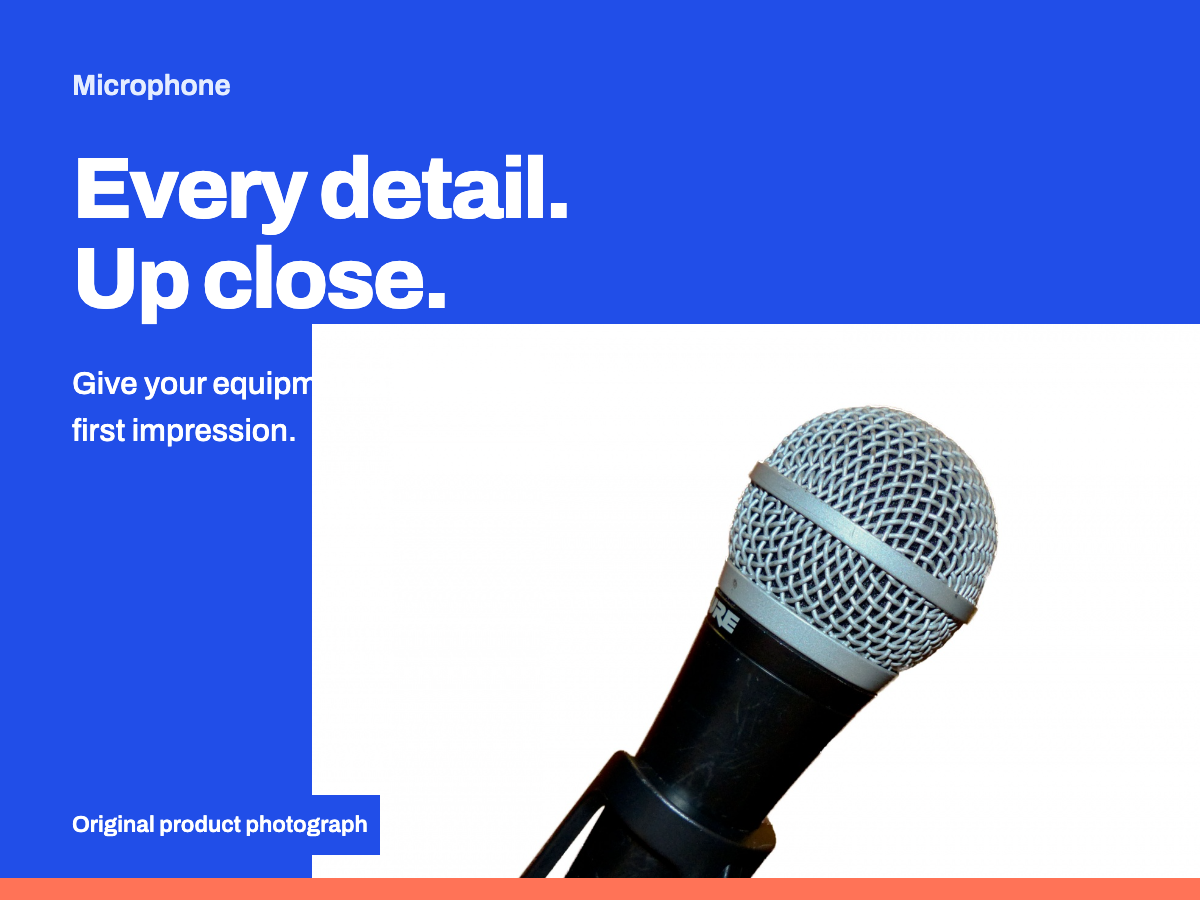
Hand-built design examples using licensed stock photos. Not an automated batch result.
A supplier folder is a starting point.
A buyer needs the story: the product, the details, the right information.
The photo transformation
Before and after.
Side by side.
Left: the original photograph. Right: the same product in a designed image. Choose either category and browse three layouts. Original product details are retained.
After — designed image
Overview · 1 of 3The result in context
This is how it could
look in your shop.
A complete product-page concept: image gallery, product information and detail sections. Switch the category, then compare the original photo with the designed set.
After: designed overview image. Choose a thumbnail to explore the set.
Acoustic instruments
Acoustic guitar
Explore the instrument, see the original details and check the product information before you choose.
Demo reference AG-DEMO
No purchase is possible. Price and shop identity are illustrative. No stock, delivery or manufacturer specifications are asserted.
Explore the product
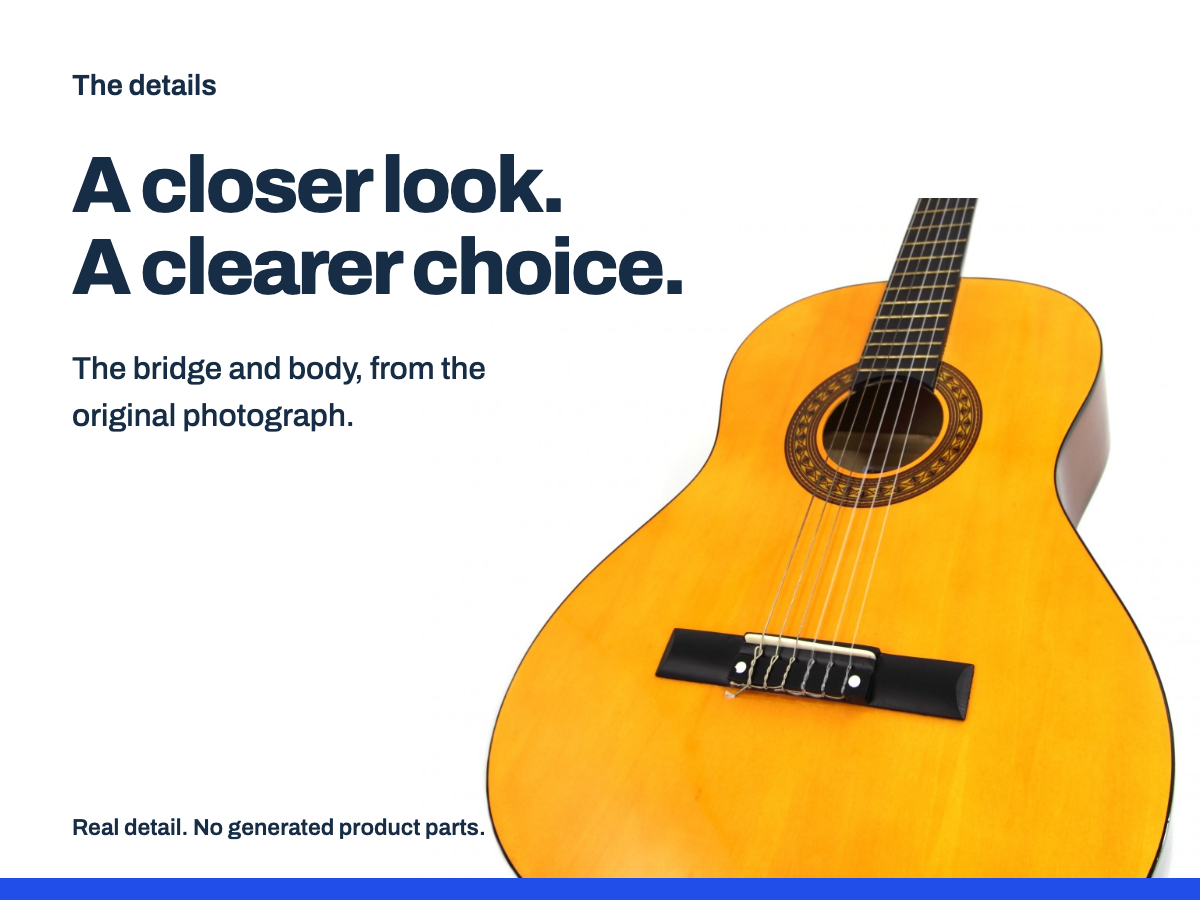
See the detail before you decide.
A closer view of the guitar’s bridge and body, taken from the same original photograph.
A real catalogue uses the supplier’s confirmed materials, dimensions and included accessories. Missing facts are resolved or omitted before publication.
Product information
This preview shows placement and presentation, not a connected or live store. The gallery works; the checkout is disabled. Commercial specifications, stock and prices would come from your approved catalogue.
From spreadsheet to sign-off
Keep the product.
Check the claims.
The pilot combines your source data, a reusable design direction and human review. Missing information stays visible instead of becoming a confident-looking claim.
- 1
Bring the source
A CSV or XLSX, your product photos and any brand guidelines. Agree one channel and one language.
- 2
Resolve the exceptions
Check materials, dimensions, compatibility and kit contents against the source. Flag anything missing or contradictory.
- 3
Approve the image sets
Review the images by SKU. Receive the agreed exports, a file manifest and a record of unresolved fields.
A missing fact should stop a claim.
This local interaction illustrates the review rule. It does not connect to a supplier, account or marketplace.
Try approving the supplied example. Then exclude the unsupported claim and try again.
- Product
- Acoustic guitar
- Strings
- 6 · visible in source photo
- Top material
- Not supplied
Awaiting review. Nothing will be published.
Built around the catalogue
One brand.
Different destinations.
Agree the output before the batch begins. A marketplace gallery and a dealer website have different jobs.
Dealer websites & your own shop
Branded image sets, close-ups and factual callouts, with a repeatable visual direction.
Marketplace image galleries
Channel-specific crops and layouts after checking the selected marketplace’s current requirements. Main-image and secondary-image rules are treated separately.
For the first pilot
Reviewed files and a SKU manifest. Live publishing, feed connectors, catalogue migration and ongoing stock or price synchronisation are outside this offer.
A small decision, before a big rollout
Put 20 of your
products to the test.
Choose a representative slice of your own-brand catalogue. See whether the result meets your standard, and whether the review saves your team work.
For music brands and distributors with a catalogue backlog, recurring launches or an upcoming channel expansion.
Download the full pilot briefCatalogue design pilot
- 20 SKUs from your supplied catalogue
- 5 designed images per SKU: 100 image files
- One agreed visual direction, language and channel
- Human review of image fidelity and source claims
- One consolidated round of corrections
- SKU manifest and final image exports
Proposed pilot scope. Timing, payment terms and any applicable tax are confirmed in writing before you commit. Extra languages, replacement photography and integrations are quoted separately.
Paste it into a reply to the person who sent you this demo. No payment or account is needed on this page.
Before you send a spreadsheet.
Does this prove your service can process 100 SKUs automatically?
No. This page demonstrates the proposed design standard and review approach. The layouts were hand-built. The pilot is a human-reviewed delivery service; automated batch throughput and overseas marketplace publishing have not been demonstrated here. A larger batch is scoped only after the pilot is accepted.
Will you redraw the instrument?
The proposed pilot uses your original product photography for the instrument and important details. Layout, copy and surrounding design can change. If a requested image needs a new product angle or an unseen detail, we request another authorised photo rather than invent it.
What happens if the data is incomplete?
We list the missing or conflicting fields before using them as claims. You confirm the source information or we agree to leave that claim out. Missing cable types, materials, measurements and kit contents are not inferred from a model name.
How will we decide whether it is worth continuing?
Agree an acceptance checklist and time the existing editing process on representative SKUs. During the pilot record active editor time, corrections, rejected images and accepted sets. Compare like-for-like work. Conversion improvement needs a separate controlled experiment with your own traffic; no uplift is promised.
Why use this alongside an image editor or marketplace AI?
Those tools may already meet your needs. This offer is for a reviewed catalogue delivery: source checks, a music-specific design direction, consistent image sets and an export mapped to your SKUs. The pilot tests whether that service is useful enough to pay for.